A Guide to Coffee Roasting Levels | Mayorga Coffee
What Are Coffee Roasting Levels and Why They Matter
If you ever wondered why one coffee tastes bright and fruity while another is rich and bold, a big part of the answer is the roast profile.
Coffee roasting levels refer to how long and at what temperature green coffee beans are exposed to heat, taking them from a raw green bean to the finished brown beans we know and love to brew our coffee.
However, roast level isn’t a universal standard. When it comes to coffee roasting levels, different roasters create their own version of a light, medium, and dark roast. So the final product may vary from roaster to roaster. What one roaster may refer to as a light roast may translate as a medium roast to another.
Understanding these differences can help you find a coffee you’ll genuinely like, without extra guesswork.

Todo el café
Mayorga se fundó hace 23 años con la premisa de que podemos ser el conducto para brindarles a los consumidores un delicioso café orgánico a un excelente precio, al mismo...
The Coffee Roasting Process
A simple explanation of what roasting does to green coffee.
Coffee starts as a green bean inside a coffee cherry. After the beans are harvested and processed, the dried green beans are ready to be roasted.
Inside a roasting machine, carefully controlled heat transforms the color, aroma, and flavor of the coffee beans. As they’re roasted, the beans start to lose moisture, expand in size, and develop hundreds of aromatic compounds, which coppers can then refer to as tasting notes when they brew. Time and temperature are important, but so is the heat management by the roaster.
Coffee beans aren’t just turning green beans brown; it’s about creating the best flavor profile that complements the coffee's unique characteristics from origin. Two coffees roasted to a similar color can absolutely have different tasting notes.
Coffee Roasting Stages From Green Bean to Roasted
The journey from green to roasted coffee includes these few key stages:
Drying: The green beans warm up and start to release moisture; this is when their natural, grassy aroma starts to change
Browning: As the beans turn from green to yellow and then brown, chemical reactions, including the Maillard reaction, help develop sweetness and roasted aromas.
First Crack: The beans expand enough to produce an audible cracking sound. This is an important milestone in roast development, but it doesn’t mean every coffee has to reach this same point
Development: The roaster decides how much further to take the coffee roasting. Lighter development may preserve brighter, more delicate qualities, while roasting for longer brings deeper, caramelized, smokier roast flavors.
Different Levels of Coffee Roast Explained (Light, Medium, Dark, Extra Dark).
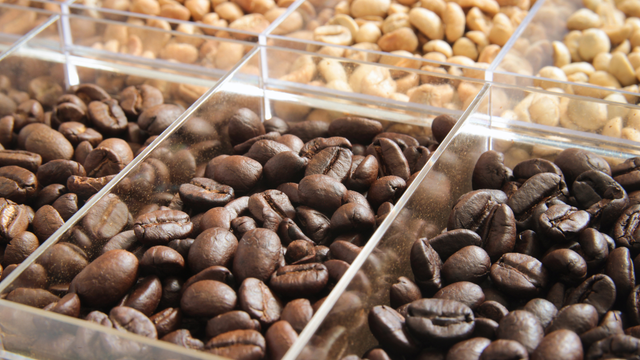
Light Roast coffee is generally the lightest in color and tends to showcase the bean’s origin’s unique characteristics. Depending on the coffee bean, you can pick up on floral notes, citrus, and fruit-forward flavors. Roasting the coffee for the least amount of time allows the roaster to preserve these tasting notes.
Medium Roast strikes a balance between the coffee’s natural characteristics and flavors developed during roasting. They often offer a rounded body with notes of chocolate, nuts, or caramel, and can still retain some brightness.
If you are looking for something versatile and beginner-friendly, this is your go-to.
Dark Roasts are roasted longer, producing deeper roasted flavors. These flavor profiles may be bold, bittersweet, molasses-like, or smoky. The perceived acidity in dark roasts is considered the lowest compared to a light roast. Although dark roasts are bolder, it does not automatically indicate more caffeine.
Extra Dark Roast goes past the second crack, creating a deeper, more intense flavor. These coffees tend to have a smooth, smokier, bolder taste with less brightness.
Espresso Roast Level and Cold Brew Roast Level
Espresso and Cold Brew are great extraction methods; however, you do not need a specific bean for either.
For espresso, many consumers enjoy medium roasts because of their chocolatey, nutty, or rich flavors that can work beautifully in a milk-based drink. However, light roast espresso can be bright and delicious, too. It really depends on what flavor profile you’re going for.
For cold brew, medium and dark roasts are typically the more popular choice for a smooth, balanced cup. If you want to enjoy a fruity, bright cup as black cold brew, we recommend trying a light roast. If you plan on dressing it up, a medium or dark roast holds up well with cream/milk.
There is no single best roast for either method. The right method is the one that tastes best to you.
How to Pick the Right Coffee Roast Level for You
Start with flavors you already recognize:
Bright and fruity: explore a light roast
Balanced and smooth: start with a medium roast
Rich and syrupy: expand towards a dark roast
Bold, smooth, and smoky: dare for an extra dark roast