Mexican Coffee Recipe for The Day of The Dead
Day of the Dead is built around memory. And in Mexico, memory runs through the cup. Making Mexican coffee at home is simpler than most people expect.
What is Mexican Coffee and Its Cultural Roots
Mexican coffee refers to cafe de olla, a spiced coffee brewed in a clay pot with cinnamon and piloncillo, a raw cane sugar with a deep, molasses-like flavor. The clay pot subtly changes the taste, adding a mineral note that separates it from anything brewed in glass or steel.
Coffee arrived in Mexico through Veracruz in the 1700s and spread through a country already using cinnamon and piloncillo in cooking. Combining them with coffee was a natural step. Today, Mexican coffee is served at roadside stands, family kitchens, and market stalls from Oaxaca to Chihuahua. It is not a specialty drink; it is everyday culture.
Why Mexican Spiced Coffee Is Served for Day of the Dead
Day of the Dead, or Dia de Muertos, is celebrated November 1 and 2. Families build altars called ofrendas to welcome back the spirits of loved ones, placing food, flowers, photographs, and objects the deceased enjoyed on the altar.
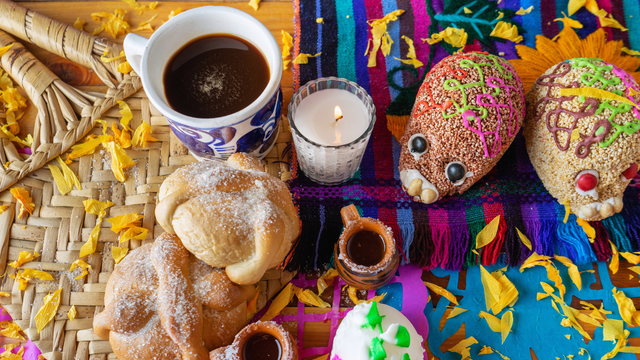
Coffee has long been part of the ofrenda. For generations of Mexican families, a cup of Mexican spiced coffee was something a grandmother or grandfather had every morning. Placing it on the altar says they are still welcome at the table.
Mexican coffee is also served during the gatherings that surround the holiday (late nights in cemeteries with candles lit and marigolds on the graves, family meals that stretch into early morning. The warmth of cinnamon and piloncillo fits November in Mexico.
Making a pot of Mexican spiced coffee for Day of the Dead is one of the most direct ways to bring the tradition into your home.
Ingredients You Need for a Mexican Coffee Recipe
A traditional Mexican coffee recipe uses a short list.
Coffee: medium to dark roast, coarsely ground. Chiapas, Veracruz, and Oaxaca all produce coffee that fits this recipe well, but any quality dark roast works.
Piloncillo: unrefined cane sugar in cone or block form, available at Latin grocery stores. Dark brown sugar is a workable substitute.
Cinnamon: Mexican cinnamon (the Ceylon variety), softer and more floral than the cassia cinnamon sold in most US supermarkets. One or two sticks per batch.
Water: four cups per serving batch.
Optional: whole cloves, star anise, or a piece of Mexican chocolate like Ibarra for added depth.
No syrups, no extracts. That is the Mexican coffee recipe.
How to Make Mexican Coffee Step by Step
The method follows the traditional café de olla approach and works in any heavy pot.
Combine water, piloncillo, and cinnamon. Use about 1 ounce of piloncillo per 4 cups of water and 1 to 2 cinnamon sticks. Heat over medium and stir until dissolved. Steep the cinnamon 3 to 5 minutes after the sugar dissolves.
Add 1 heaping tablespoon of coarsely ground coffee per cup of water. Stir once. Bring to a gentle boil, reduce to a low simmer for 5 minutes. Longer than that and the coffee turns bitter.
Remove from heat. Rest for 2 minutes; the grounds will settle.
Strain through a fine mesh strainer into a mug or clay cup. Serve immediately.
A Mexican Coffee Cocktail Twist for Adult Celebrations
Day of the Dead is a celebration. The ofrenda may hold mezcal or tequila if those were a loved one’s drink, and a mexican coffee cocktail honors that spirit.
The simpler version: make a pot of Mexican spiced coffee, cool slightly, and add a shot of mezcal per cup. Mezcal’s smokiness amplifies the cinnamon and piloncillo. Reposado o añejo tequila also works.
For a richer Mexican coffee cocktail, add Kahlúa along with the mezcal, top with whipped cream, and dust cinnamon on top.
Another option: cold brew the Mexican coffee overnight and serve over ice with mezcal and a squeeze of orange.
Make a large batch of the base and let guests add spirits to their preference.
Serving Mexican Coffee at a Day of the Dead Gathering
Serve in clay cups if you have them. If not, dark ceramic mugs work. Set cinnamon sticks as stirrers and keep a small dish of extra piloncillo for guests who want more sweetness.
Pair with pan de muerto: the sweet, anise- flavored bread baked for the holiday, or sugar skulls, tejocotes, or anything that would appear on an ofrenda.
If you are building an ofrenda, place a small cup of mexican coffee on it. It does not need to be elaborate. The gesture is the point.