What is Drip Coffee? A Beginner's Guide to a Great Cup of Coffee
Drip coffee is one of the most popular and familiar ways to brew coffee at home, in offices, and in coffee shops. It’s simple, consistent, and doesn’t require too much hands-on work. This is why automatic drip coffee brewers have remained popular no matter how many new brewing methods emerge.
Getting the right cup of drip coffee depends on a few factors, including the coffee beans you choose, the correct grind size, the coffee-to-water ratio, your water quality, and ultimately, the brewing technique.
What is Drip Coffee and What Does Drip Coffee Mean?
Drip coffee refers to coffee brewed by having hot water gradually pass through ground coffee and a coffee filter. As the water passes through the grounds, it extracts the flavor, aroma, natural oils, and other soluble compounds before dripping into your cup or carafe.
When people ask about the meaning of drip coffee, they’re usually referring to the brewing method rather than the type of bean. You can use any type of coffee bean to make drip coffee in a traditional drip coffee maker.
Automatic drip coffee machines are particularly common because they handle 95% of the brewing process for us. Once water and ground coffee are added, the machine heats the water, releases and distributes the hot water over the fresh coffee grounds.
The result is a convenient, clean, and straightforward cup that can be brewed from an individual cup to a large batch for crowds and events.
How Drip Coffee Works and the Brewing Process
The drip coffee brewing process begins when water is heated inside the coffee maker. Ideally, you want your water temperature to reach between 195°F and 205°F, which is the ideal temperature to extract the coffee flavor without burning or under-extracting.
The heated water is then distributed over the ground coffee, usually through a multi-hole “showerhead” located above the filter. Water gradually soaks the grounds, dissolves soluble flavor compounds, and then gravity pulls the brewed coffee through the paper filter (or reusable filter) into your coffee mug or carafe.
Water temperature, grind size, the amount of coffee used, and the evenness of the coffee grounds can all have an effect on the final cup. A balanced extraction produces a flavorful cup. Water passing too quickly can result in weak or sour coffee, whereas water passing too slowly can result in bitter or dry flavors.
Choosing the Right Drip Coffee Beans and Grind Size
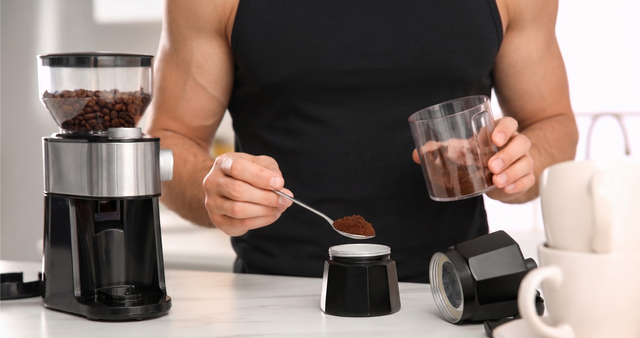
The best part of drip coffee is that you can use any bean you want. Oil content, roast profiles, etc., don’t matter - choose your favorite! Fresh, high-quality whole beans are a great starting point. Grinding fresh is best to help preserve more of the coffee's aroma and flavor.
For most automatic drip coffee makers, we recommend going for a medium grind. A medium grind has a texture similar to granulated sugar. Coffee that is ground too finely may slow the water down and contribute to that over-extracted flavor. Grinds that are too coarse may have the water flow too quickly, resulting in weak-tasting coffee.
At the end of the day, coffee is subjective. So, your coffee maker and personal preference may require some tweaking. We recommend treating a medium grind and two tablespoons of ground coffee per 8 oz cup of water as a starting point and working from there.
Brewing the best Drip Coffee at Home
Making delicious drip coffee does not require complicated equipment or extensive brewing steps. Here are a few drip coffee steps that make a noticeable difference in your final brew:
-
Fresh coffee: Whole-bean coffee ground shortly before brewing generally provides the best aroma and flavor
-
Proper grind: We recommend using a medium grind as a starting point for most automatic drip coffee machines
-
Coffee to water ratio: A good starting ratio is about 1:16, or roughly one gram of coffee per every 16 grams of water. You can adjust based on your personal preference
-
Quality water: Since brewed coffee is mostly water, unpleasant flavors in your water heavily affect your final cup
-
Clean equipment: Coffee oils, mineral buildup, or old, residual coffee grounds can build up inside the brewer and affect the coffee flavor
-
Brew and enjoy promptly: Coffee left sitting out for a while or even on a hot plate for an extended period of time can develop harsher, more bitter flavors. We recommend brewing and enjoying fresh!
Drip Coffee vs Other Popular Brewing Methods
Drip coffee differs from other popular brewing methods primarily in how the water interacts with the coffee grounds.
Pourovers: these use a similar filtration process and also use a paper filter, but the brewer manually pours water over the grounds, often in timed increments. This provides greater control of the water flow, saturation, and extraction.
French Press: uses immersion brewing. Coffee grounds remain at the bottom of the French press, with hot water separated by a metal filter. This produces a heavier-bodied cup since most coffee oils and fine particles remain in the beverage.
Espresso: uses pressure to force hot water through finely ground coffee. This produces a smaller, more potent, and more concentrated coffee.
Drip coffee falls somewhere in between convenience and control. It generally requires the least amount of attention than pour-overs or manual brewing methods.